Tilt-Panel Installation in WA: Managing Wind, Bracing and Ground Conditions
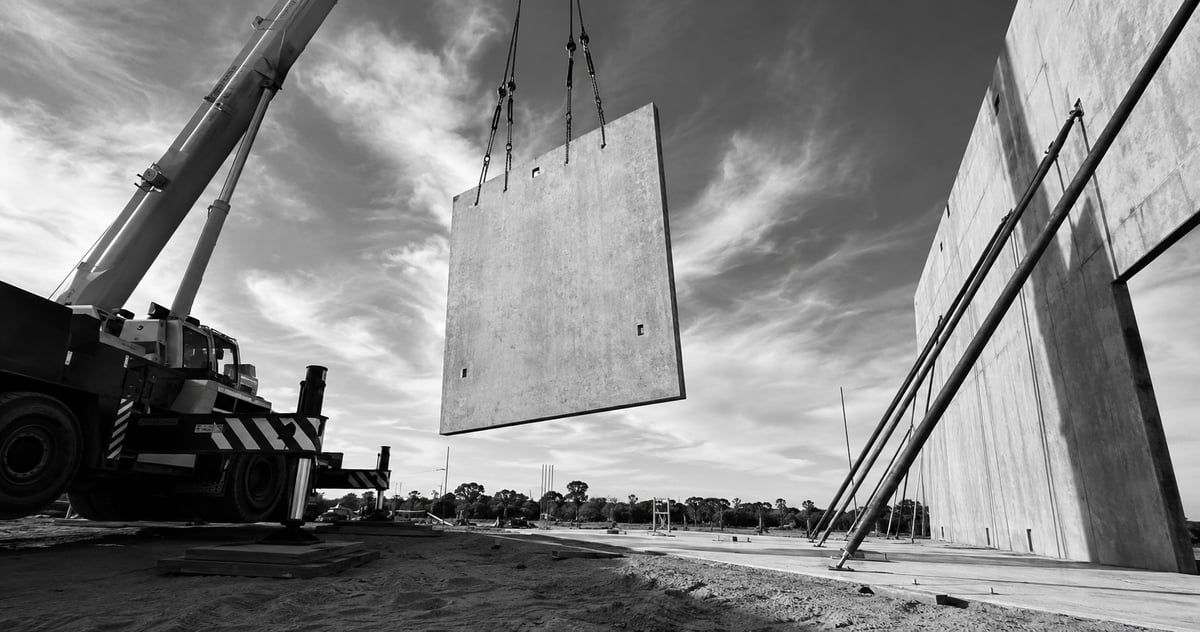
Tilt-panel construction has become the default for warehouses, distribution centres and commercial builds across WA. It's fast, cost-effective and delivers a robust structure. But the period between a panel leaving the casting bed and being permanently tied into the structure is where the real risk sits. A panel that is safely lifted but poorly braced is still a potential fatality. This post covers the three factors that most often catch crews out on WA sites: wind, temporary bracing and ground conditions.
Wind Is the First Thing to Check, Not the Last
A tilt panel is a large flat surface, which makes it a sail. Even a modest breeze exerts significant force across the face of a panel while it's suspended or standing on temporary braces. In Perth and across the wider WA region, afternoon sea breezes — the Fremantle Doctor — can build quickly and catch a crew that started the day in still conditions.
Before any lift, confirm the maximum permissible wind speed for the panel and the crane. This comes from the rigging study and the crane's load chart, not from a supervisor's judgement on the day. As a rule, panel lifting is typically suspended once sustained wind reaches around 10 to 12 m/s, but the specific limit must be documented for each job. Key practices:
- Have a calibrated anemometer on site and monitor it continuously, not just at the start of the shift.
- Check the Bureau of Meteorology forecast and plan the heaviest or largest panels for the calmest part of the day, usually early morning.
- Establish a clear stop-work wind threshold and make sure every crew member knows it. The decision to stop should never be negotiable.
- Account for wind loading on panels that are braced but not yet tied in. A standing panel on braces is still exposed until the roof or connecting structure is complete.
Temporary Bracing: The Detail That Gets Skipped
Temporary bracing holds the panel upright and stable until permanent connections are made. It is engineered, not improvised. The brace design should come from the temporary works engineer and specify brace type, size, quantity, anchor points and the required concrete strength at the fixing location.
Common failures we see relate to shortcuts on the fixing end. A brace is only as good as what it's anchored to. Consider:
- Cast-in ferrules or drilled anchors must reach the specified concrete strength before load is applied. Green concrete will not hold.
- Braces must be installed at the designed angle. Too shallow or too steep and the load path is compromised.
- Never remove a brace early to reposition equipment. Panels have failed because a brace was pulled to clear access for a forklift or scissor lift.
- Inspect braces daily during the standing period, particularly after high wind or nearby heavy vehicle movement.
Ground Conditions Decide Where the Crane Sits
The crane is the single largest concentrated load on the site. Getting the ground right underneath it is non-negotiable. Much of the Perth metro sits on sand, and WA sites frequently deal with variable fill, reactive clays and poorly compacted pads. Any of these can lead to outrigger settlement mid-lift, which is one of the fastest ways to lose a crane.
Ground preparation should be treated as part of the lift plan:
- Obtain the geotechnical data and confirm the allowable bearing pressure against the crane's outrigger loads.
- Size crane mats or pads to spread the load within the ground's capacity. Do not assume a standard steel plate is enough on sand or fill.
- Check for underground services, pits and recently backfilled trenches before positioning outriggers.
- After rain, reassess. WA's dry ground can become unpredictable once saturated, especially over clay.
Bringing It Together on the Day
Safe tilt-panel work is a sequence, and each stage depends on the one before it. The rigging study, the crane load chart, the brace design and the ground assessment all need to align before the first panel comes off the bed. On WA sites, the added variable is weather — conditions can shift within an hour, so the crew needs the authority and the discipline to stop.
Lake Rigging WA plans and executes tilt-panel lifts across the Perth metro and regional WA. If you're coordinating a tilt-panel build and need a lift plan that accounts for real site conditions, get in touch with our team.
Free quote
GET YOUR LIFTING
PROJECT QUOTE IN MINUTES.
