rigging services in Australian climate
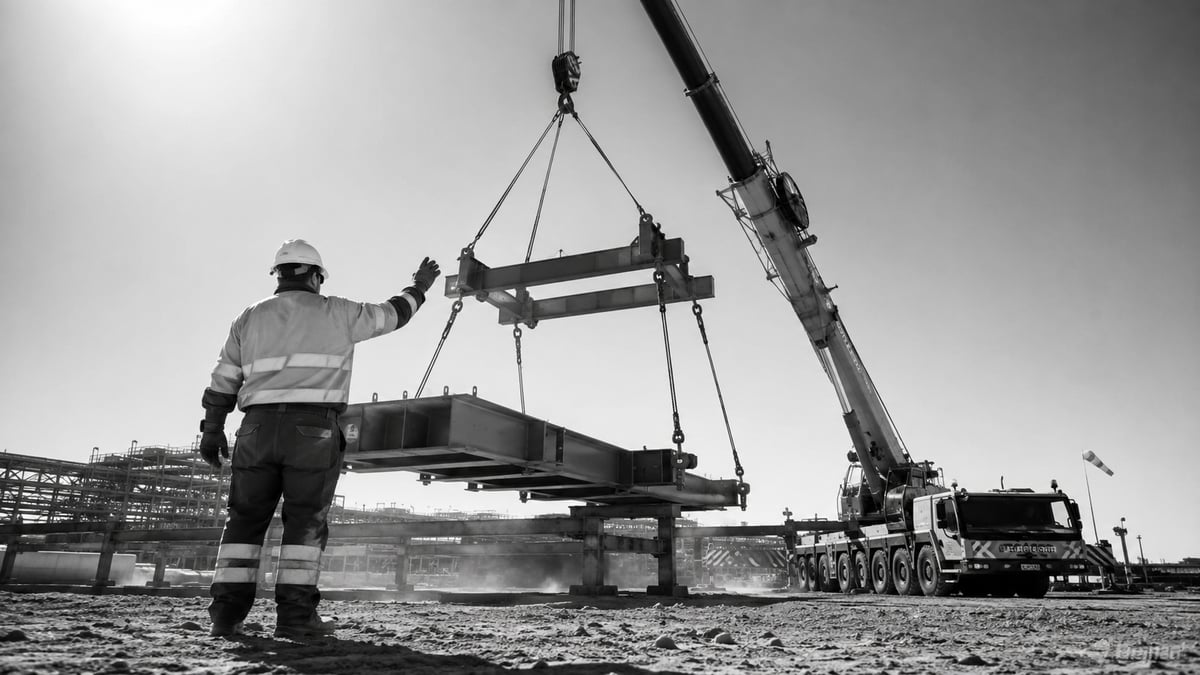
Rigging in Western Australia is not the same as rigging in a temperate climate. The conditions on a Pilbara shutdown or a Perth tilt-panel job in February are unforgiving, and they directly affect crane capacity, sling ratings, exclusion zones and crew fatigue. Treating climate as an afterthought is how lifts go wrong. Here's how the WA environment shapes competent lift planning and execution.
Heat: the factor that quietly derates everything
Ambient temperatures across WA regularly push past 40 degrees, and steel in direct sun runs far hotter. Heat matters for more than crew comfort. Synthetic slings and round slings lose working load limit as temperature climbs — most polyester rated gear should not be used above 100 degrees Celsius surface contact, and load skin temperatures on dark structural steel sitting in the sun can approach that. Grease in crane slew rings and winch gearboxes thins, hydraulic fluid viscosity drops, and engine derating on crane power packs is real in high ambient conditions.
Practical steps that make a difference:
- Check sling and softener temperature ratings against actual surface temps, not shade temps.
- Store synthetic gear out of direct sun before use — a sling baking on the ground all morning is a different sling by midday.
- Factor heat-related crane derating into your capacity margins, and confirm with the crane supplier.
- Build heat management into the SWMS — hydration, rotation, and scheduling heavy lifts for the cooler part of the day where the program allows.
Wind and cyclones: know your shutdown numbers
Wind is the most common reason a lift gets stood down in WA, and rightly so. Every mobile and crawler crane has a maximum permissible wind speed for the load chart in use, and that figure drops sharply as boom length and load surface area increase. Tilt panels and large cladding sheets act like sails — a panel that is comfortable to lift at 8 m/s becomes a serious hazard at 12 m/s.
North of the 26th parallel, cyclone season from November to April changes the whole planning picture. Structures and part-erected steel need securing ahead of a warning, and rigging programs on remote sites should carry contingency for lost days. Always:
- Confirm the maximum wind speed for the specific load chart and configuration — not a generic figure.
- Use a calibrated anemometer at working height, not a phone app or ground-level reading.
- Account for the increased sail area of tilt panels, tanks and large fabricated sections.
- Have a documented stand-down trigger and a plan for securing suspended or part-landed loads.
Coastal and marine corrosion
Perth, Fremantle, Bunbury, Dampier and Port Hedland all sit in aggressive corrosion zones. Salt-laden air attacks shackles, wire rope, master links and lifting points. Corroded gear loses strength invisibly, and a pitted wire rope can fail well below its stamped WLL. In coastal and marine environments, inspection intervals need to tighten, and gear stored on site must be protected. Wire rope slings in particular deserve close attention — broken wires, corrosion and reduced diameter are all disqualifying defects under AS 2759.
Dust, remoteness and access
Iron ore red dust gets into everything — sheave bearings, wire rope lubrication, load cell electronics and crane air filters. On remote sites, a failed component can mean days of downtime waiting on parts, so preventive maintenance and spares planning are part of rigging competence, not a separate concern. Remote work also means your crew is often hours from help, which raises the bar on planning, communication and self-sufficiency.
Building climate into the lift plan
A proper WA lift plan treats climate as a design input from the start. That means checking gear ratings against real conditions, confirming crane deratings, setting wind stand-down triggers, tightening inspection intervals in corrosive zones and planning for dust and remoteness. None of this is optional. The environment here will find any weakness in a plan that ignores it.
If you're planning a lift, shutdown or structural erection in a demanding WA environment, get the conditions into the conversation early. Talk to the Lake Rigging WA team about lift planning that accounts for the climate you're actually working in.
Free quote
GET YOUR LIFTING
PROJECT QUOTE IN MINUTES.
